
Oxford study shows positive impact of ElephantOS on operational and financial performance in Kenya
Kenya · Case study · By Christabel Apholung Ngwashi et al., University of Oxford
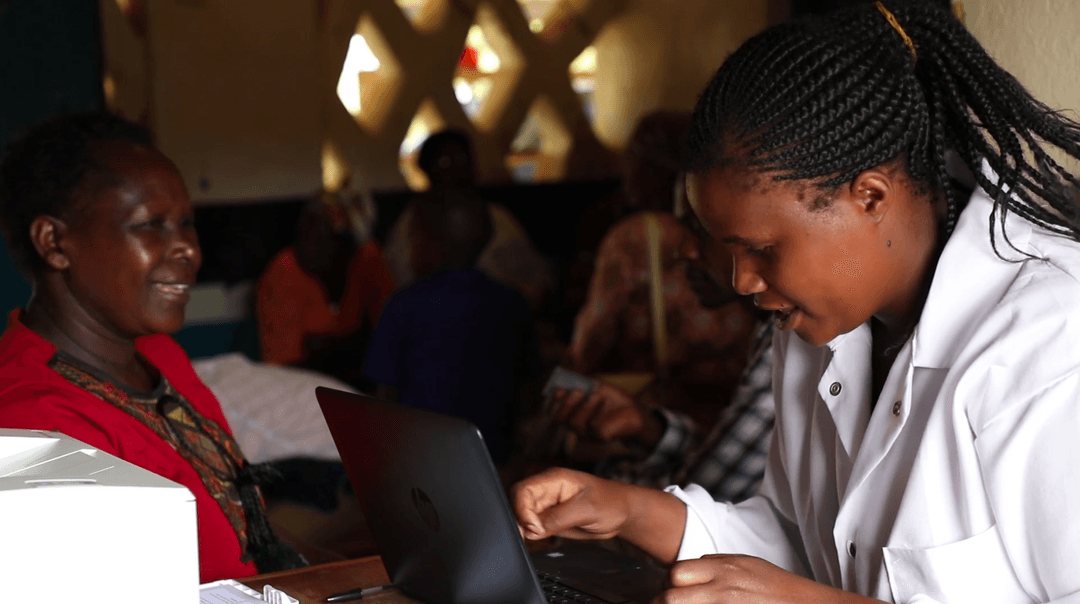
There is little evidence on how digital hospital information systems affect health facilities in Sub-Saharan Africa, where most records are still on paper. A study led by the University of Oxford set out to close that gap, evaluating the impact of ElephantOS on the operational and financial performance of health facilities in Kenya.
How the study worked
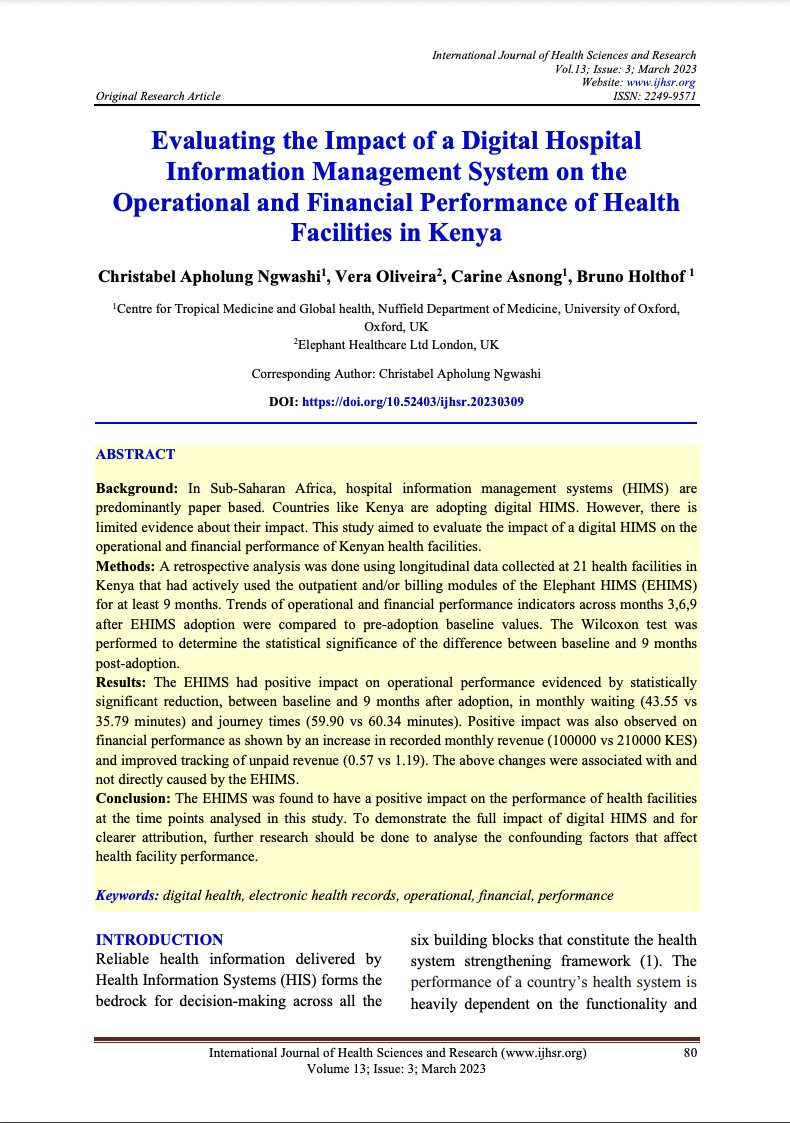
The researchers analyzed longitudinal data from 21 Kenyan health facilities that had used the ElephantOS outpatient or billing modules, or both, for at least nine months. They compared performance at three, six and nine months after adoption with each facility's baseline before adoption.
18% shorter waiting times
Average monthly waiting time fell from 43.55 minutes at baseline to 35.79 minutes nine months after adoption, a statistically significant reduction.
110% increase in recorded monthly revenue
- KES 100,000
- recorded monthly revenue before
- KES 210,000
- nine months after adoption
Tracking of unpaid revenue also improved, with the indicator rising from 0.57 to 1.19. Most facilities using the billing module saw a statistically significant rise in total monthly revenue. The authors suggest the system may have contributed by improving patients' willingness to pay through better experience, and by improving the tracking of invoices and unpaid revenue.
Conclusions
The study found that ElephantOS had a positive impact on facility performance at the time points analyzed. The authors note that these changes were associated with the system rather than shown to be directly caused by it, and that further research should analyze the other factors that affect facility performance.
Ngwashi CA et al. Evaluating the impact of a digital hospital information management system on the operational and financial performance of health facilities in Kenya. IJHSR 2023;13(3).
Read the full paper ↗