
Digitizing primary health care: lessons from the CHAI and ElephantOS pilots in Bayelsa and Ondo States
Nigeria · Case study · By Daniel Gideon, Operations Manager, Nigeria
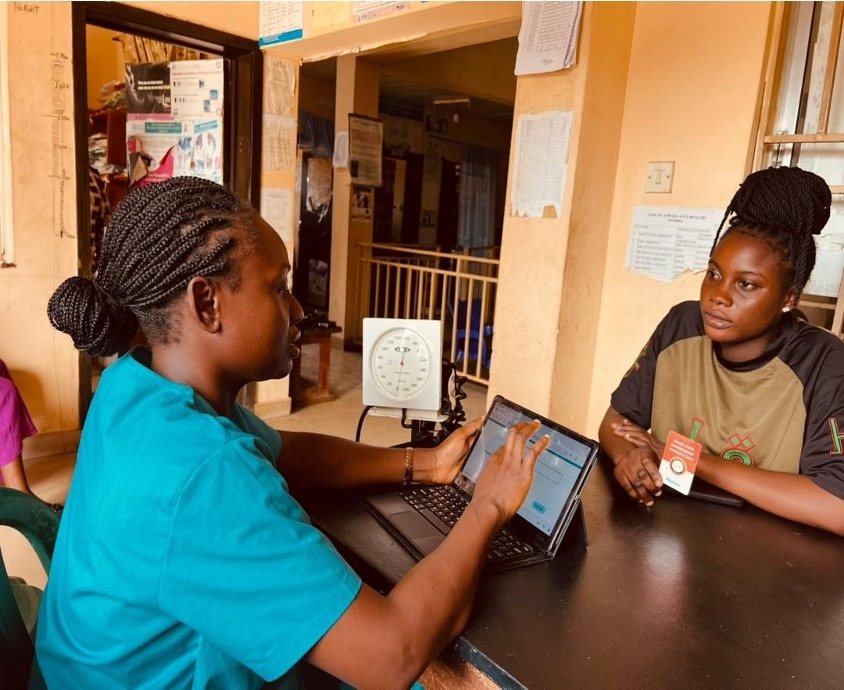
Over a year, Elephant Healthcare worked with the Clinton Health Access Initiative (CHAI) and the Bayelsa and Ondo State Primary Healthcare Boards to digitize 36 public primary health facilities, replacing paper records with ElephantOS. The pilots showed that digitizing primary care is both feasible and beneficial in low-resource settings.
The problem
Baseline assessments across the 36 facilities found:
- Manual, duplicated data entry
- Fragmented patient records
- Long waits in outpatient, antenatal and immunization services
- Frequent stockouts
- Little visibility of workforce performance
- Poor data flow to state planners
The intervention
ElephantOS is an HL7 FHIR-compliant electronic health record designed to work offline. Health workers are onboarded in under two hours, and each consultation takes under three minutes to record. The deployment included:
- Modules for outpatient care, antenatal care, immunization, family planning and childbirth, laboratory and pharmacy
- Inventory and expiry tracking
- Dashboards for facility and state managers
- Role-based access
How we deployed
Needs assessment: we assessed infrastructure, network coverage across MTN, GLO and Airtel, staffing, patient load and workflows at all 36 facilities.
Train the trainer: each facility named a Site Champion, who completed two days of technical and change-management training and then trained all their colleagues before go-live.
Go-live: the 36 facilities launched between February and March 2025, supported by in-person teams, a remote helpdesk, WhatsApp and phone, with daily data monitoring.
Reach
- 62,000+
- clinical consultations
- 47,000+
- immunization interactions
- 36,000+
- children under five seen
- 8,300
- antenatal visits
Nearly 4,000 insured patients were also tracked through the system.
Faster care
In Ondo, the time to record each patient encounter halved, from about 22 minutes to 11. In Bayelsa it fell by 30% in outpatients, 34% in antenatal care, 38% in immunization and 35% in family planning and childbirth, with some services reaching reductions of 70 to 84% by October.
- Up to 60%
- shorter waits in Ondo (35 to 14 minutes)
- About 40%
- shorter waits in Bayelsa
- Nearly 30%
- faster immunization visits
Patients reported faster service, more reliable immunization follow-up, better continuity of care and improved drug availability, with satisfaction of 80 to 85%.
Better data
ElephantOS enforced complete required fields, prevented duplicate records and flagged errors in real time. In comparison, paper registers in facilities that had not been digitized overreported outpatient and family planning activity and underreported antenatal care and immunization.
Fewer stockouts
Expiry alerts, stock visibility for every facility, replenishment prompts and commodity tracking cut stockouts in Bayelsa by more than 50% for antenatal commodities, up to 70% for family planning and up to 90% for immunization commodities.
Visibility of the workforce
In Ondo, 76% of health workers used the system at least five days a week. In Bayelsa, 185 staff were trained, and the data showed an average absenteeism rate of 49% over five-day periods, highlighting where stronger supervision was needed. Dashboards helped local government teams spot underperforming staff, facilities needing refresher training, inconsistent use of modules and staffing bottlenecks.
What we learned
What worked: the train-the-trainer model, offline capability, real-time dashboards and fast onboarding. Challenges: variable staffing, competing programs such as NTD campaigns, unreliable power, and the need for extra change management in family planning and childbirth services.
What it means for policy
Digitizing primary care is operationally feasible in both rural and urban facilities. Sustaining it means embedding electronic records in primary care protocols and pairing them with supportive supervision. The pilots support statewide scale-up, integration with DHIS2 and BHCPF systems, and stronger digital governance.